We prefer to describe a promotion in terms of what a person can actually use rather than the number in its headline. Our checklist begins with eligibility, qualifying deposits, stake caps and the time available. We then look at how a bonus changes the freedom to select games and withdraw money. A smaller transparent offer can be easier to understand than a larger one with multiple conditions.
A welcome offer is only useful after its qualifying deposit, wagering and withdrawal conditions are confirmed. We do not treat advertised figures as verified availability.
Headline Offer and Effective Value
Do not assume that claims for a similarly named site, including a 100% match, free spins or a stated cap, apply here.

| Small first-deposit example | Confirmed outcome |
|---|---|
| Deposit amount | Check the current minimum qualifying deposit |
| Match calculation | Cannot be calculated until the published match rate and cap are verified |
| Bonus balance | Bonus funds are separate from withdrawable cash |
| Cash-out position | Depends on the terms attached to the offer |
The casino must publish full conditions under its own verified identity before readers can assess a great first offer.
Wagering, Eligibility, and Promotional Limits
Wagering is calculated from the current published rules. A multiplier may apply to the bonus or both bonus and deposit; we require the exact written formula before assessing the offer.
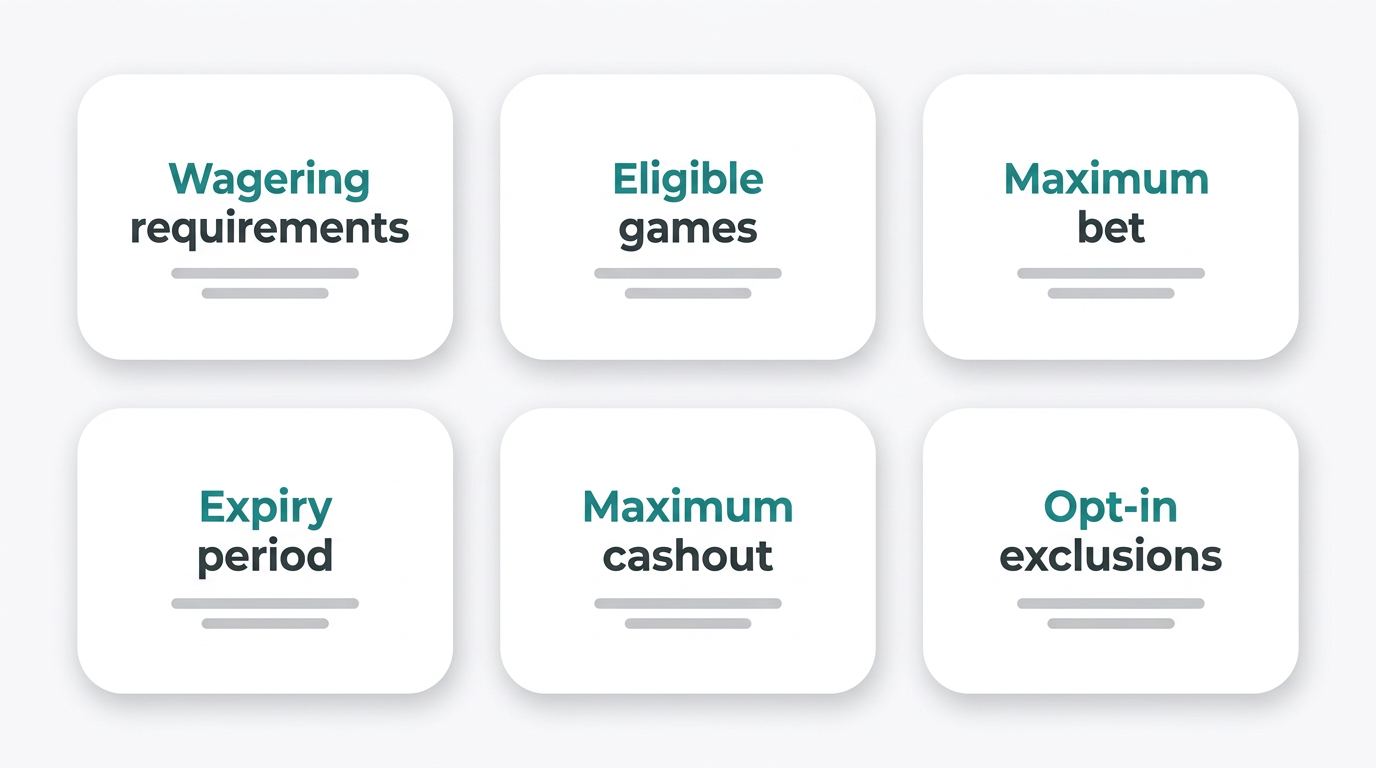
- Activation: Confirm whether you must opt in or enter a bonus code before making the qualifying deposit.
- Wagering multiplier: Check whether the multiplier applies to bonus funds alone or to the deposit plus bonus.
- Eligible games: Slots, table games and live casino titles may contribute at different rates, which changes the time and spend needed to complete the bonus.
- Expiry and stakes: Confirm the expiry period and any maximum bet while playing with bonus funds.
- Withdrawal limits: Check for a cap on bonus-derived winnings and excluded payment methods, games or player groups.
Bonus winnings can only be withdrawn after the relevant published requirements are met. A missing multiplier, game-contribution rule or withdrawal cap leaves the practical value unknown.
We also make a clear distinction between an advertised example and a verified offer available to a particular reader. Promotions can be withdrawn or restricted by location. Before opting in, we suggest taking a dated copy of the relevant rules, checking exclusions and considering whether the bonus adds unnecessary pressure to continue playing.
Practical checks we recommend
Separate the advertising amount from cash that can actually be withdrawn. Write down the qualifying payment, wagering multiplier, minimum odds or game contribution, time limit, maximum qualifying bet and any cap on winnings. Calculate the required volume of play before considering whether a promotion suits your normal budget.
We treat this as a practical checklist rather than a promise about any individual service. Published terms can change after a promotion has been advertised, and availability can differ by country, account status or payment provider. For that reason, we recommend reading the current rules directly, keeping a dated record and testing whether the information applies to your own circumstances. An uncertain detail should remain marked as uncertain in our comparison.
Our method separates the information visible before registration from the evidence that can only be assessed after an account exists. We avoid inferring technical capabilities from images or promotional descriptions. When two sources disagree, we prioritise the written conditions and the competent regulator, and we document the difference instead of smoothing it over.
A good decision also has a stopping rule. If eligibility is unclear, support cannot explain a withdrawal condition or the contract does not identify the responsible business, there is no reason to rush. We prefer to postpone a transaction, request written clarification and choose an option that provides stronger documentation. This preserves control over the budget and reduces avoidable disputes.